It should be relatively easy to sell an old or damaged car. You fill in the car information and receive an offer, arrange the pickup, fill out the paperwork, and receive payment.
Unfortunately, not all junk car buyers do that process in an honest manner. Some scams rely on attractive quotes that change later, while others involve fake payments, questionable paperwork, or pressure to hand over the vehicle before everything is verified.
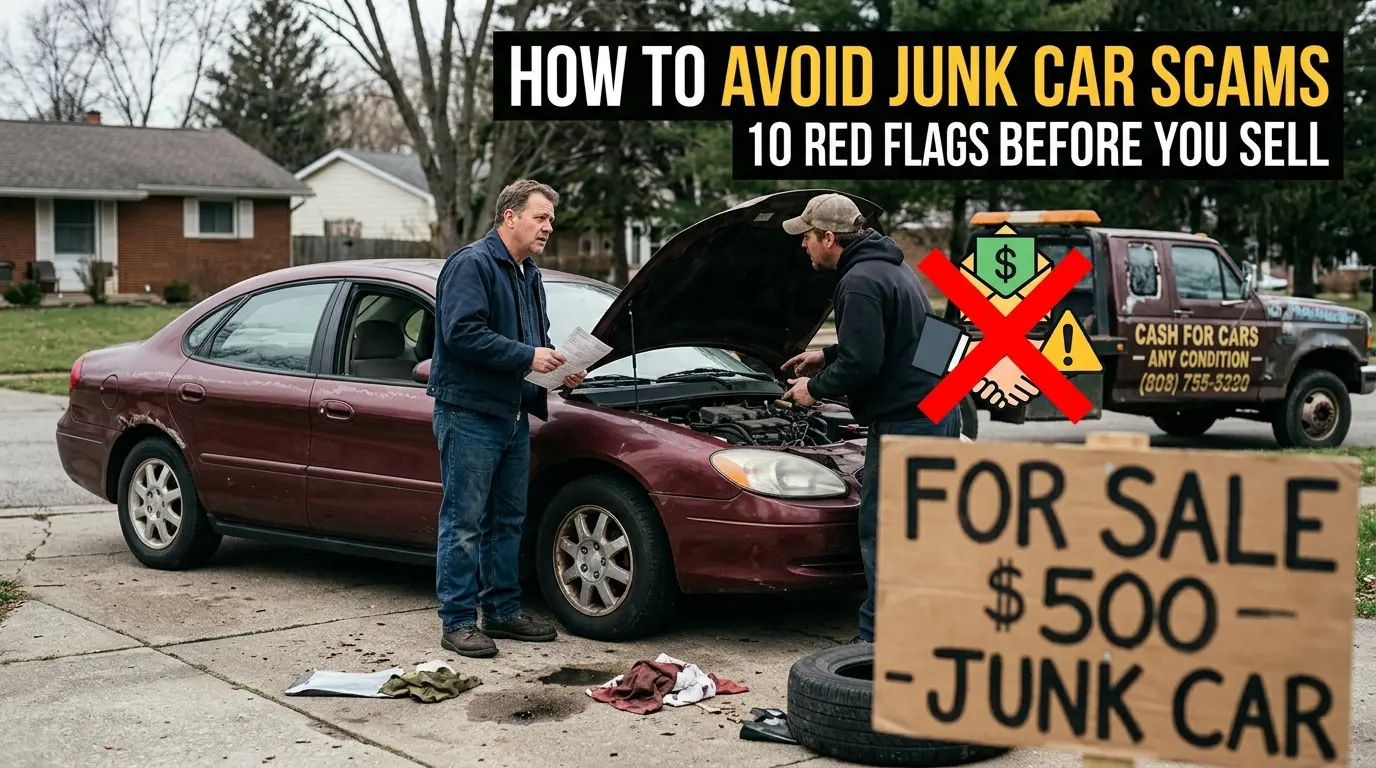
By being aware of the warning signs, you can find a legitimate buyer and prevent extra financial and ownership issues. Here are 10 red flags to watch for before you hand over your keys.
1. The Buyer Refuses to Give You a Written Offer
A legitimate buyer should be able to explain what they are offering and what conditions apply to the transaction. A verbal promise over the phone is much harder to verify later.
Ask for a written quote that clearly states:
- Offered purchase price
- Vehicle information
- Towing arrangements
- Any deductions or fees
- Payment method
- Conditions that could change the final price
A written offer gives you something to compare with other buyers and makes vague promises easier to identify.
2. The Price Suddenly Drops at Pickup
This is one of the most annoying junk car scams that can be with the initial offer appearing to be a great deal.
The buyer may give the salesperson $2,500 and then say that the car is worth a lot less once they get to the dealership. They might suddenly indicate damage, missing parts, or mechanical issues that were already reported.
How to Protect Yourself
Before scheduling pickup, confirm that the offer is based on the information you provided. If the buyer discovers something materially different from what you described, a legitimate adjustment may be reasonable, but a major unexplained reduction is a warning sign.
Do not feel obligated to accept a new offer simply because the vehicle is already on the tow truck.
3. You Are Asked to Pay Towing Fees Upfront
Some car sellers experience unexpected charges with respect to the towing, as “free towing” is a common term used by legitimate junk car buyers, but not every one of them will have to pay extra unexpected charges during transportation.
Be especially cautious if someone asks you to send money before pickup for:
- Towing
- Insurance
- Processing
- Administrative fees
- “Release” charges
- Deposit requirements
Check the Terms Before Pickup
If the tow is offered as a free service, make sure to ask if there is a $0 deduction from the final bill.
If you have deductions for any legal reason, then there should be an agreement that tells you exactly what you will receive. If the value continues to fluctuate, you may want to look elsewhere.
4. The Buyer Wants a Blank Title or Unsigned Paperwork
The title to your vehicle is likely one of the most essential possession documents. By delivering a blank or an incomplete title, you will have difficulty because you might not have much evidence of what was actually agreed upon.
Avoid signing documents that contain blanks that are supposed to be filled in by the buyer if they indicate that they will do so later.
Before signing, check that:
- Buyer information is completed correctly.
- Sale information is accurate.
- Vehicle details match your car.
- The date is correct.
- You receive copies of relevant documents.
If something does not look right, stop the transaction until you understand it.
5. You Are Told to Hand Over the Car Before Getting Paid
One of the most obvious indicators is if a person asks you to hand over your car before they have confirmed the payment.
A buyer might say:
“We’ll send your payment after the vehicle is delivered to our yard.”
That means you’ll have less control after the car has gone.
Verify Payment Before Releasing the Vehicle
Verify payment and payment method prior to leaving the premises with the vehicle. When receiving a payment via check, cashier’s check, electronic transfer, or other payment method, check to see if it is a legitimate payment or just a message that money was sent on a screen.
A payment notification alone does not necessarily mean funds are available.
6. The Business Has No Verifiable Identity
A good businessman should normally provide some means for the identification of the customer.
Be cautious when a buyer:
- Refuses to provide a business name
- Has no physical business address
- Uses only a temporary phone number
- Cannot explain who will collect the vehicle
- Has no verifiable online presence
- Avoids providing basic business information
You do not need to investigate a company for hours. A few minutes checking its name, address, phone number, and customer reviews can reveal obvious inconsistencies.
Check More Than Just Reviews
Reviews are helpful but are not the only source of information. Check to ensure business information is consistent across multiple sources and that the business you contact is the business you researched.
7. The Payment Method Looks Suspicious
A junk car payment scam can involve fake checks, fraudulent electronic payments, or unusual requests to return part of the money.
For instance, a person may “accidentally” mail you $4,000 for a $2,500 car and request you to mail back the $1,500 shortfall. In the event that the original payment turns out to be false, you may be liable for the glitched amount.
Safer Payment Practices
Before completing the sale:
- Confirm the exact purchase price.
- Verify that the payment was actually received.
- Do not refund supposed overpayments.
- Be cautious of unfamiliar payment services.
- Keep proof of the completed transaction.
Never let urgency convince you to ignore basic payment verification.
8. The Buyer Wants Your Personal Documents
There’s a lot of information a junk car buyer will need to get through the deal, but they don’t necessarily require every personal document you have.
Ask why you need to give copies of sensitive information and how it is going to be used before you give it.
Avoid involving unnecessary personal information in the transaction as much as possible.
Remove Personal Items From the Vehicle
Before pickup, check the car carefully for:
- Driver’s license or identification
- Registration documents
- Insurance information
- Bank or financial documents
- Garage door openers
- Personal electronics
Personal information stored in the car can pose unwanted privacy and identity theft dangers.
9. You Do Not Receive a Receipt or Sale Record
You should have some form of documentation that the sale has taken place once the vehicle is sold.
A buyer who says, “You do not need a receipt,” should make you pause.
Keep These Records
At minimum, keep copies of:
- Written purchase agreement
- Payment confirmation
- Title transfer paperwork
- Receipt or proof of sale
- Pickup information
- Communications about the transaction
These records can become valuable if questions about ownership or payment arise later.
10. The Buyer Pressures You to Decide Immediately
A legitimate offer does not normally require you to make a rushed decision without reviewing the details.
Be cautious if someone says:
- “This price expires in 10 minutes.”
- “You have to decide before the driver leaves.”
- “Do not call anyone else.”
- “We need the title immediately.”
- “Just trust us and sign.”
Pressure is often used to prevent sellers from comparing offers or noticing unfavorable terms.
Take time to verify the buyer, review the paperwork, and confirm the final payment before agreeing to anything.
A Simple Checklist for Finding a Legitimate Junk Car Buyer
You do not need a complicated process to screen a buyer. Before scheduling pickup, run through this quick checklist:
| What to Check | What You Want to See |
| Written offer | Clear purchase price and conditions |
| Towing | No unexpected transportation deduction |
| Business identity | Verifiable name, phone, and address |
| Payment | Clear method and confirmed amount |
| Paperwork | Complete and accurate documents |
| Reviews | Consistent customer feedback |
| Pickup | Confirmed date and buyer identity |
| Receipt | Written proof of the transaction |
If several answers are unclear, there is little reason to rush into the sale.
What Should You Do If a Buyer Looks Suspicious?
You are not required to continue a transaction simply because you requested a quote.
If something feels wrong, pause the sale and ask questions. If the buyer refuses to explain the terms or continues applying pressure, walk away.
For sellers comparing safe ways to sell a junk car, checking the offer, payment terms, paperwork, and buyer credentials before pickup can prevent many common problems. A straightforward process should not require you to ignore obvious warning signs.
Final Thoughts
To avoid junk car scams, the key is to slow down the transaction just enough in order to verify the most important details. A written offer, transparent towing details, verified payment, complete paperwork, and a buyer who can be traced should safeguard you against most of the regular headaches.
You do not have to accept an offer simply because someone arrives with a tow truck. If the terms change unexpectedly or something about the buyer does not seem right, it is reasonable to stop and reconsider.
When you want a straightforward option for selling a junk car, iBuy Vehicles can help you understand the offer and transaction details before moving forward. The goal should always be a clear agreement, verified payment, and properly documented vehicle transfer.
Frequently Asked Questions
How can I tell if a junk car buyer is legitimate?
First, check your business name, contact information, physical address, customer reviews, and written offer. An actual buyer must equally be open about his payment and towing plan prior to pickup.
Can a junk car buyer change the price at pickup?
If the car is materially different from the depiction you used to get an offer — for instance, if it is damaged but was offered as in good condition, or vice versa — they will have a good reason to amend an offer. But a significant last-minute cut without an adequate rationale is a warning sign. Make sure about how the final offer is established before pickup.
Should I pay a junk car buyer for towing?
If a buyer advertises free towing, make sure no fee is taken out of your payment for this service that you are paying for. Do not send an upfront “towing deposit” unless you know why it is being requested.
Is it safe to accept a cashier’s check for a junk car?
A cashier’s check can be used in legitimate vehicle transactions, but counterfeit checks exist. Do not treat a check, payment screenshot, or notification as proof that funds are available until the payment has been properly verified.
Should I give a buyer my car before receiving payment?
The safer option is to confirm that the payment had been agreed upon before letting go of the vehicle. Always ensure that you have all the transaction documents properly filled out and signed, and make sure to obtain a bill of sale before your car is driven away.
Which documents should you keep after selling your junk car?
Keep your purchase agreement, receipt, payment confirmation, title transfer records, and relevant communication with the buyer. Requirements can vary by location, so follow your local vehicle transfer rules as well.