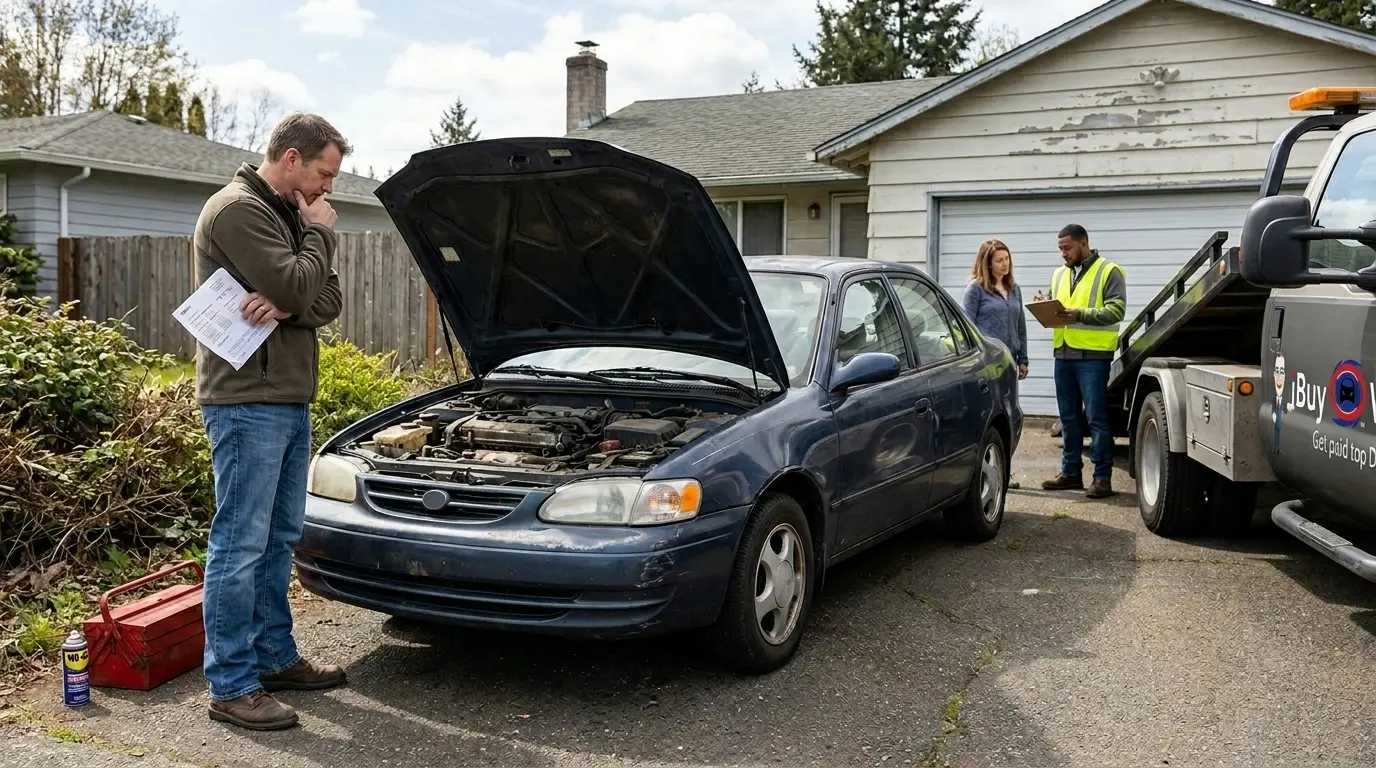
Have an older vehicle that keeps needing repairs? Deciding whether to repair or sell car is not always easy. One repair bill might seem manageable, but when repair costs continue adding up, it becomes difficult to know if you are investing wisely or simply delaying the inevitable.
The right choice depends on several factors, including your vehicle’s current value, expected future repairs, reliability, and how much it costs to keep it on the road. Looking only at the latest repair estimate rarely gives you the complete picture.
In this guide, we will walk through a practical cost-based approach that helps you compare repair expenses against your vehicle’s actual worth, making it easier to decide whether fixing your current car or moving on is the smarter financial decision.
Why This Decision Is More Than Just One Repair Bill
Many drivers focus only on today’s repair invoice. In reality, one repair rarely tells the whole story.

A vehicle may need a new transmission today, followed by suspension work, electrical repairs, or cooling system problems a few months later. Looking at your total ownership costs provides a much more accurate picture than evaluating one repair in isolation.
Some of the biggest factors include:
- Vehicle age
- Overall reliability
- Previous repair history
- Expected future maintenance
- Current resale potential
- Daily transportation needs
| Quick Insight: Sometimes repairing a vehicle saves thousands of dollars. Other times, continuing to repair it simply delays replacing a car that has already reached the end of its useful life. |
A Simple Cost Formula That Makes the Decision Easier
Instead of relying on guesswork, compare the total cost of keeping your current vehicle against its actual value.
Decision Formula
Repair Cost
+ Expected Future Repairs
+ Lost Time Without Your Vehicle
= Total Cost of Keeping the Car
Compare that number with:
Current Vehicle Value
+ Expected Junk or Salvage Offer
If keeping the vehicle costs close to—or even exceed — its value, selling often becomes the more practical financial decision.
Start With Your Current Vehicle Value
Before approving any expensive repair, find out what your vehicle is actually worth today.
Several factors influence value, including:
- Vehicle age
- Overall condition
- Mileage
- Accident history
- Local market demand
- Service records
Without knowing your vehicle’s approximate value, it becomes almost impossible to judge whether a large repair makes financial sense.
Compare Repair Costs Against Vehicle Value
One commonly used guideline is comparing repair expenses with your vehicle’s market value.
| Repair Cost Compared to Vehicle Value | Recommended Action |
| Less than 25% | Repair is usually reasonable. |
| Around 25%–50% | Compare future repairs before deciding. |
| More than 50% | Selling often becomes the better financial option. |
This is not a strict rule, but it provides a practical starting point for making an informed decision.
Major Repairs That Often Change the Equation
Certain repairs can quickly exceed what an older vehicle is worth.
Engine Replacement
Replacing an engine is one of the largest repair expenses a vehicle owner can face.
Average costs often range between $4,000 and $9,000, depending on the vehicle and engine type.
If the vehicle itself is only worth a few thousand dollars, replacing the engine may not provide good long-term value.
Transmission Failure
Transmission repairs commonly range from $2,500 to $7,500.
For relatively newer vehicles in good condition, the repair may still make financial sense. For older vehicles with additional problems, it often becomes much harder to justify.
Frame Damage
Structural damage affects both vehicle safety and resale value.
Even after repairs, some vehicles never return to their previous condition, making selling a more practical option in many situations.
Electrical Problems
Modern vehicles contain dozens of electronic systems that can become expensive to diagnose and repair.
Intermittent electrical issues can also be difficult to solve permanently, resulting in repeated repair visits.
Signs Your Car May No Longer Be Worth Repairing
No single problem automatically means you should replace your vehicle. However, multiple warning signs together usually indicate that continuing repairs may not be the smartest investment.
Watch for These Warning Signs
- Repairs are becoming more frequent every year.
- Major components continue to fail
- Repair costs are approaching the vehicle’s value.
- Reliability has declined significantly.
- The vehicle no longer feels safe for everyday driving.
- Downtime is affecting work or family responsibilities.
When several of these warning signs appear together, it may be time to seriously consider selling instead of repairing.
When Repairing Your Car Still Makes Sense
Not every expensive repair means replacing your vehicle is the best option.
Repairing may still be worthwhile when:
- The vehicle has been reliable overall.
- Maintenance has been performed consistently.
- Only one major repair is needed.
- The vehicle still meets your transportation needs.
- Buying another vehicle would create additional financial pressure.
Sometimes spending a few thousand dollars today is far less expensive than purchasing another vehicle with monthly payments, higher insurance, and unknown repair history.
Real-Life Examples: Repair or Sell?
Every vehicle has a different story, so there is no universal answer. Looking at real-world situations can make the decision much easier.
Scenario 1: A Well-Maintained Daily Driver
A ten-year-old sedan needs a $900 repair after years of dependable service. It has been maintained regularly, has no major mechanical issues, and still meets the owner’s transportation needs.
Better Choice: Repair it.
The repair cost is relatively low compared to the value and remaining lifespan of the vehicle.
Scenario 2: Multiple Major Repairs Within a Year
An older SUV has already needed expensive suspension work, a new radiator, and now faces a major transmission repair.
Better Choice: Selling is likely the smarter financial decision.
When repair bills continue stacking up, the total ownership cost can quickly exceed the value you receive from keeping the vehicle.
Scenario 3: A Car With Very High Mileage
A vehicle has over 200,000 miles, runs inconsistently, and requires another major repair.
Better Choice: Compare the repair cost against the vehicle’s current value before investing more money.
Even if the repair solves today’s problem, additional issues may appear shortly afterward.
Scenario 4: A Newer Vehicle With One Unexpected Repair
A five-year-old vehicle suffers one expensive repair but has otherwise been reliable.
Better Choice: Repairing often makes financial sense.
Replacing a dependable vehicle because of one repair can sometimes cost far more than simply fixing it.
Before Making Your Final Decision
Taking a few extra minutes to evaluate your options can prevent expensive mistakes.
Ask Yourself These Questions
- ✔ How much is the vehicle worth today?
- ✔ How much will this repair actually cost?
- ✔ Are additional repairs likely within the next year?
- ✔ Can you depend on the vehicle every day?
- ✔ Would replacing it improve your overall transportation costs?
- ✔ Are you emotionally attached to the vehicle, or are you making a practical financial decision?
Answering these questions honestly often makes the right choice much clearer.
Common Myths About Repairing Older Cars
Many drivers rely on advice that sounds reasonable but does not always reflect reality.
| Myth | Reality |
| Every expensive repair means it is time to sell. | One major repair does not automatically make a vehicle a bad investment. |
| Older cars always cost more than newer ones. | Some older vehicles remain less expensive to own than replacing them. |
| Buying another car is always cheaper. | A replacement vehicle may bring loan payments, insurance increases, and unknown maintenance costs. |
| A vehicle with high mileage has no value. | Maintenance history and overall condition often matter just as much as mileage. |
| The first repair estimate is always the best option. | Comparing repair estimates can sometimes reduce costs significantly. |
Understanding these misconceptions helps you make a decision based on facts rather than assumptions.
Ready to Make the Right Decision for Your Vehicle?
Deciding whether to repair your current vehicle or move on is rarely about one repair bill alone. Looking at repair costs, future maintenance, reliability, downtime, and your vehicle’s overall value provides a much clearer picture of which option makes the most financial sense.
If your car still has years of dependable service ahead, repairing it may be the smarter investment. However, if repair bills continue increasing while reliability keeps declining, selling may help you avoid even larger expenses in the future.
If you decide that selling is the better option, working with a trusted buyer can make the process much easier. iBuy Vehicles offers a straightforward selling experience with competitive offers and assistance throughout the process, helping you sell your unwanted vehicle quickly and with confidence.
Frequently Asked Questions
Should I Fix My Car or Sell It?
The answer depends on the repair cost, your vehicle’s current value, its overall condition, and whether you expect additional repairs soon. Looking at the total cost of ownership instead of a single repair bill usually leads to a better decision.
When Is a Car Not Worth Fixing?
A vehicle often becomes difficult to justify repairing when major repairs approach a significant portion of its current value, reliability continues to decline, and costly breakdowns become frequent.
How Do I Know When to Sell an Old Car?
If your vehicle requires repeated expensive repairs, spends more time in the repair shop than on the road, or no longer provides dependable transportation, it may be time to consider selling instead of continuing to invest in repairs.
Is It Better to Repair My Car or Buy Another One?
There is no universal answer. A dependable vehicle needing one reasonable repair may still be the better investment, while an aging vehicle with recurring problems can become far more expensive than replacing it.
Should I Get More Than One Repair Estimate?
Yes. Comparing estimates from different repair shops helps you understand whether the recommended repair and pricing are reasonable before making a large financial commitment.
Does High Mileage Automatically Mean I Should Sell?
Not necessarily. Many vehicles continue providing reliable service well beyond 100,000 miles when they have been properly maintained. Mileage should always be considered alongside condition, repair history, and overall reliability.