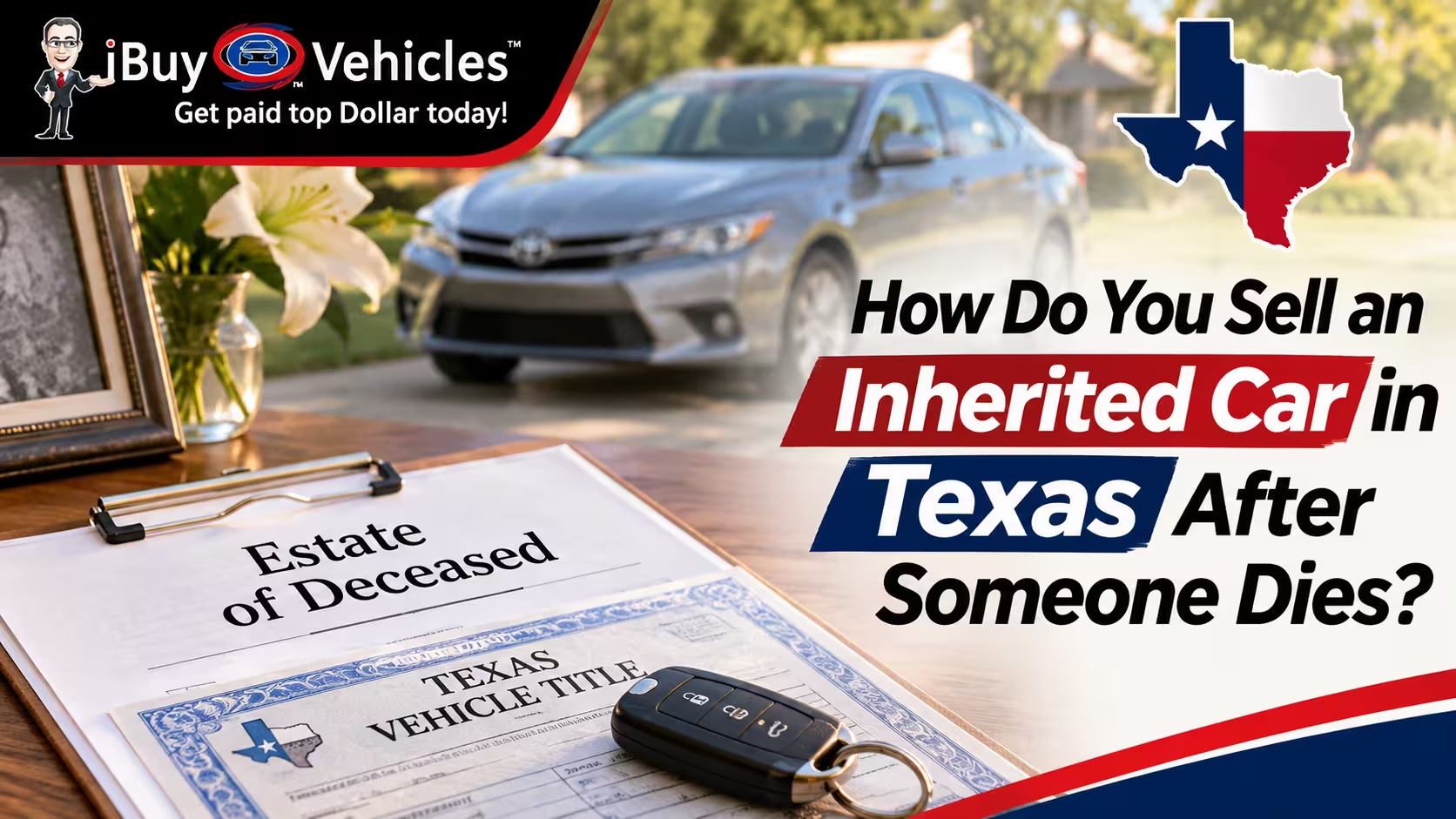
Selling a car after its owner dies involves more than finding a buyer and agreeing on a price. Before anyone can legally sell the vehicle, the family must establish who inherited it and who has authority to transfer ownership. That authority may come through probate, an applicable inheritance procedure, or a documented right of survivorship.
Texas has different procedures depending on whether the deceased person left a will, whether an estate administration is underway, and who the legal heirs are. A surviving spouse or child does not automatically have permission to sign the vehicle title. Understanding the estate situation first helps prevent delays, disputed ownership, and an invalid sale.
Who Has the Legal Right to Sell an Inherited Car?
The person legally authorized to sell a deceased owner’s vehicle depends on the estate’s circumstances. Being a relative, named beneficiary, or person holding the keys does not automatically establish authority to transfer the title.
| Estate Situation | Who May Handle the Transfer? |
| Estate is in probate | Court-appointed executor or administrator, acting within their authority |
| No estate administration is necessary | Eligible heirs using the applicable TxDMV heirship procedure |
| Vehicle has a valid survivorship agreement | Surviving owner, following the required transfer procedure |
| Court approves a specific inheritance procedure | Person authorized under the applicable court order |
If several heirs have rights to the vehicle, their interests must be addressed before the sale. One family member should not assume they can sell the entire vehicle without the required consent or legal authority.
Does Selling an Inherited Car Require Probate in Texas?
Not always. Probate is one way to establish who controls a deceased person’s property, but Texas provides certain procedures for eligible estates that do not require a full administration.
Common situations include:
- Probate administration: A court appoints an executor or administrator to manage estate property.
- Affidavit of Heirship for a Motor Vehicle: Eligible heirs may use TxDMV Form VTR-262 when no estate administration has occurred and none is necessary.
- Small Estate Affidavit: Texas Estates Code Chapter 205 provides a procedure for qualifying intestate estates, subject to specific requirements and court approval.
- Right of survivorship: A valid vehicle survivorship agreement may allow the surviving owner to transfer the vehicle.
These options are not interchangeable. For example, a Small Estate Affidavit is not simply another name for the motor vehicle heirship form.
Under Texas Estates Code Section 205.001, a Small Estate Affidavit generally requires at least 30 days to have passed since death, no pending or granted application for a personal representative, and qualifying estate assets not exceeding $75,000, excluding homestead and exempt property. Other requirements also apply.
What Documents May Be Needed?
The paperwork depends on the legal route used. TxDMV identifies different evidence for probated and non-probated estates.
| Document | When It May Apply |
| Certificate of Title | When available for the vehicle transfer |
| Letters Testamentary | When an executor has been appointed through probate |
| Letters of Administration | When a court appoints an administrator |
| Form VTR-262 | For an eligible non-probated vehicle inheritance |
| Death Certificate | When required for the applicable transfer route, including certain survivorship transfers |
| Form 130-U | Application for Texas Title and/or Registration |
| Lien Release | When a recorded lien has been paid and must be released |
For Form VTR-262, the required heirs must sign before a notary. The form also explains which surviving spouses or children may need to participate. The exact signing requirements depend on the family circumstances.
Important: Do not assume that a will, death certificate, or one heir’s signature alone is enough. Confirm the correct documentation with the county tax assessor-collector’s office before arranging the sale.
How to Sell the Vehicle After Establishing Authority
Once the authorized person and transfer procedure are clear, the family can prepare the vehicle for sale.
- Confirm ownership authority: Determine whether probate, Form VTR-262, or another valid procedure applies.
- Resolve heir interests: Address the rights of all relevant heirs or surviving owners before proceeding.
- Complete the title process: Submit the required documents to the county tax assessor-collector’s office and follow its instructions.
- Prepare the vehicle: Gather maintenance records, keys, and available ownership paperwork. Check for any outstanding loan or lien.
- Complete the sale: The authorized seller signs the necessary transfer documents and provides the buyer with the required information.
A Practical Example
If someone in Texas dies intestate, their surviving spouse and children may have inheritance rights to the vehicle under state law. The spouse should not automatically assume the car belongs solely to them. The family must establish the legal heirs and determine whether the vehicle qualifies for the non-probate motor vehicle heirship procedure.
If the estate meets the requirements, the applicable heirs may complete Form VTR-262. If the family situation is more complicated, legal advice may be needed before anyone attempts to sell the vehicle.
What Should You Check Before Accepting an Offer?
Even after ownership authority is established, a few details can affect the transaction.
- Outstanding loans: Confirm whether a lender still has a recorded lien.
- Multiple heirs: Make sure the sale reflects the rights of everyone legally entitled to the vehicle.
- Vehicle condition: Disclose known mechanical or physical issues accurately.
- Buyer paperwork: Confirm the title and application are completed correctly.
- Sale records: Keep a signed bill of sale, buyer details, sale date, and vehicle identification number.
Texas generally requires buyers to title a purchased vehicle within 30 days of the sale. A seller should also submit a Vehicle Transfer Notification to TxDMV to help protect against future tickets, toll violations, or other liability connected with the vehicle.
Frequently Asked Questions
Can one child sell a deceased parent’s car in Texas?
Only if that child has the legal authority to transfer the vehicle. Other heirs may have ownership interests, so family relationship alone does not give one child the right to sell it.
Can you sell an inherited car without probate in Texas?
Sometimes. Eligible heirs may use Form VTR-262 when no estate administration has occurred, and none is necessary. Other legal circumstances may require probate or a court-approved procedure.
Can an Executor Sell a Deceased Person’s Car Without Heir Consent?
The executor’s authority depends on the will, court appointment, and applicable estate rules. Whether additional consent is necessary depends on the circumstances. The executor should follow the court’s instructions and obtain legal advice when heir interests are disputed.
Is a death certificate enough to transfer a vehicle title?
No. A death certificate alone does not establish who has authority to sell the vehicle. The appropriate probate, heirship, or survivorship documentation must also be provided.
How Much Time Does It Take to Sell a Car Received Through Inheritance?
The timeline depends on the estate process, required signatures, court involvement, and county title processing. A straightforward transfer may take less time than an estate requiring probate or resolution of heirship disputes.
Final Thoughts: Establish Ownership Before Selling an Inherited Car
Selling an inherited vehicle in Texas starts with confirming who legally controls it. Probate, heirship affidavits, small-estate procedures, and survivorship agreements each have different requirements. Choosing the correct route prevents ownership disputes and problems during the title transfer.
Once the paperwork is in order, iBuy Vehicles helps sellers explore their vehicle-selling options. Confirming legal authority before accepting an offer makes the transaction clearer for both the family and the buyer.