Wondering how to junk a car without the potential headaches of legal violations or red-tape paperwork? Are your wheels now at the point where repairs would cost more than the vehicle is worth? The Texas junk car process is actually a pretty simple one when you know what to expect, which is the good news. But if you follow a few easy precautions early on, you might save yourself from some headaches after the sale.
Whether your car has been taking up space on the driveway for years, it was ruined in an accident, or you just get tired of fixing things that no longer work. This guide goes over everything from knowing if your car is junk-worthy to the paperwork you need before contacting a buyer.
When Is It Time To Get Rid of an Old Junk Car?
Not every older vehicle belongs in a junkyard. A few repairs every now and then may yield some additional time in your car. But there are situations where just fixing it does not make financial or practical sense anymore.
The Repairs Become More Expensive Than the Actual Car
If you pay more for the repairs than what the car is worth, that is clearly a sign that it is time to junk a car in Texas. Spending thousands of dollars on an aging vehicle often provides little return.
Most of the major repairs that cause people to “junk” their cars include:
- Engine replacement
- Transmission failure
- Extensive electrical problems
- Multiple major repairs within a short period
The Vehicle Is No Longer Safe
Safety should always come before convenience. If your vehicle has severe suspension, frame, or engine problems that will cost more to repair than the vehicle is worth, repairing it likely will not make financial sense.
Some common examples include:
- Severe frame damage after an accident
- Brake system failures
- Steering or suspension problems
- Airbag or safety system malfunctions
Your Car Has Been Sitting Inactive for Quite a While
A car that is not being used only loses value and sits in your driveway or garage, taking up space. If you do not intend to fix or use it, learning how to get rid of an old car can help you free up space and avoid ongoing maintenance costs.
Additional problems might also form in vehicles that have been left parked for months or years:
- Dead batteries
- Flat tires
- Rust and erosion
- Fuel system deterioration
Flood or Fire Damage Makes Repairs Impractical
Flood- and fire-damaged vehicles frequently start exhibiting serious “invisible” problems well after repairs have been visually done. Failing electrical wiring and electrical components may go over time.
So, in these kinds of situations, junk vehicle disposal is the viable and economical option.
| Quick Tip: Before deciding to junk your vehicle, compare the estimated repair costs with its current market value. If the repairs require an investment that exceeds its value, proceeding with the junking process is usually still mathematically favourable. |
What You Need Before Starting the Texas Junk Car Process
Some advance preparation helps the sale run much more smoothly. Being equipped with the proper documents required and preparing your vehicle in advance ensures that you get an accurate estimate and eliminates the possibility of any delays while picking up the car.
Gather Your Ownership Documents
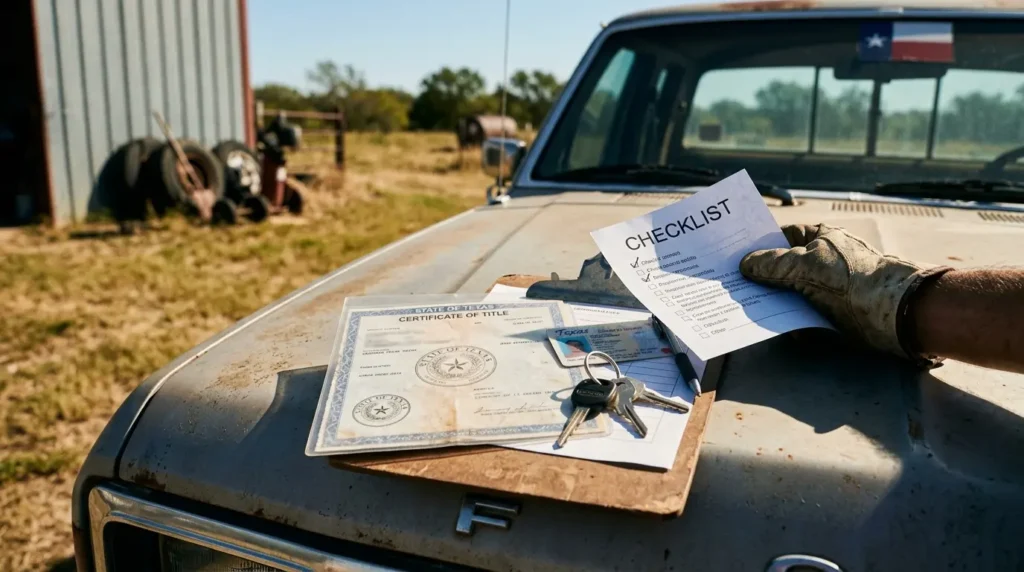
Most licensed buyers will ask for documents that verify you legally own the vehicle.
Keep These Items Ready:
- Vehicle title
- Proof of ownership
- Government-issued proof of identity
- Vehicle Identification Number (VIN)
- Current odometer reading
If your vehicle still has an active loan, contact your lender before arranging a sale. Ownership must typically be resolved before the title transfer can be completed.
Remove Personal Belongings
It is surprisingly easy to leave important items behind when a vehicle has been used for years. Take a few minutes to inspect every storage area before pickup.
Check These Common Places:
- Glove compartment
- Center console
- Door pockets
- Under the seats
- Trunk and spare tire compartment
You should also remove personal documents, garage door openers, toll tags, charging cables, and any valuables.
Clear Your Digital Information
If your vehicle includes built-in technology, remember to delete personal data such as:
- Saved navigation addresses
- Connected mobile devices
- Garage door settings
- Bluetooth contacts
This extra step helps protect your privacy after the vehicle changes ownership.
Remove the License Plates
In many cases, Texas owners pull their plates before the buyer picks up the vehicle. Since requirements can vary depending on the situation, check the original source to confirm with the Texas Department of Motor Vehicles (TxDMV) before completing the transfer.
By ensuring the process is done correctly now, you can avoid trouble with registration later.
How to Sell a Junk Car Without Unexpected Problems
Once you have all your paperwork lined up, the next thing is reaching out to buyers. The action here is stated simply, but the data that you provide back can have a direct effect on the quotes and prices you will receive. Unlike a regular automobile, where heart and jocular assurances can always be given on what a buyer may discover when they arrive (talking your process once more on price), flatbed lorries need the client to understand as well as an honest opinion regarding what he/she needs to expect with regard to the condition of the auto.
Describe Your Vehicle Accurately
Think of this as introducing your vehicle rather than trying to “sell” it. A clear and accurate description allows buyers to assess its value before scheduling a pickup.
Include details such as:
- Year, make, and model
- Current mileage
- Whether the vehicle starts or runs
- Major mechanical or body damage
- Missing parts, if any
- Whether you have the vehicle title
Providing these details upfront makes it easier for licensed buyers to understand the vehicle’s condition and prepare a realistic offer.
Honest About the Vehicle’s History
You do not need to write a lengthy description, but you should mention anything that could influence the buyer’s evaluation.
Examples include:
- Previous accident damage
- Flood or fire damage
- Salvage history
- Major repairs
- Parts that have already been removed
Honest communication helps prevent surprises during pickup and creates a smoother experience for both parties.
Comparing Your Options Before You Junk a Car in Texas
Not every buyer operates the same way. Before accepting the first offer, spend a little time comparing your options. Even a few extra minutes of research can help you better understand the overall Texas junk car process and choose the option that best fits your situation.
| Option | Best For | Things to Consider |
| Licensed vehicle buyer | Owners looking for a straightforward sale | Verify licensing and title transfer requirements. |
| Salvage yard | Vehicles with valuable reusable parts | Offers may depend on current parts demand. |
| Automotive recycler | End-of-life vehicles | Focuses on environmentally responsible recycling. |
| Private buyer | Repairable vehicles | May require more time and negotiation. |
| Vehicle donation | Owners interested in charitable giving | Check eligibility for any available tax deductions. |
Before Accepting an Offer, Compare More Than Price
The highest quote is not always the best choice. Consider the entire process before making a decision.
Ask questions like:
- Is towing included?
- What paperwork is required?
- When can the vehicle be picked up?
- Is payment provided at pickup?
- Will the buyer handle the necessary title transfer steps?
A buyer who clearly explains the process often provides a smoother experience than one who only advertises the highest price.
Steps to Junk a Car in Texas
After selecting a buyer, the remaining process is usually straightforward. While every company has its own procedures, the overall steps are generally similar across Texas.
Step 1: Request Quotes
Start by contacting a few licensed buyers instead of relying on a single offer. Most companies will ask for basic information before providing an estimate.
Be prepared to provide:
- Vehicle Identification Number (VIN)
- Vehicle condition
- Title status
- Photos, if requested
- Your location
If you are located in Houston, sharing your general area can also help the buyer estimate pickup availability without affecting your quote.
Step 2: Review the Offers Carefully
Once you receive multiple quotes, compare them side by side rather than focusing only on the dollar amount.
Look at factors such as:
- Final payment amount
- Included towing service
- Pickup timeframe
- Required documents
- Overall professionalism
Sometimes a slightly lower offer with a clear process is a better choice than a higher quote with hidden conditions.
Step 3: Schedule Vehicle Pickup
After accepting an offer, you will arrange a convenient pickup time. In most cases, you do not need to transport the vehicle yourself because towing arrangements are handled by the buyer.
Before the scheduled pickup:
- Remove any remaining personal belongings.
- Have your paperwork ready.
- Keep your identification nearby.
- Make sure the vehicle is accessible.
These small preparations can help the appointment go smoothly.
Step 4: Complete the Required Paperwork
When the buyer arrives, both parties will review the necessary documents before the vehicle changes ownership.
Depending on the transaction, this may include:
- Title assignment
- Bill of sale
- Vehicle Transfer Notification
- Other documents required by the Texas Department of Motor Vehicles (TxDMV)
Take a few moments to verify that the information is accurate before signing anything.
Step 5: Keep Your Sales Records
After the transaction is complete, store your paperwork in a safe place. Keeping copies protects you if questions arise later regarding ownership or the sale.
Your records should include:
- Bill of sale
- Payment receipt
- Title transfer documentation
- Vehicle sale records
Now that you have completed the paperwork and picked up your vehicle, there is one more step: learning what happens after your car leaves your premises, along with some basic mistakes that car owners should avoid during the process.
Common Mistakes That Can Delay or Complicate the Process
Junking a vehicle is usually straightforward, but a few simple mistakes can create unnecessary delays. Most of these issues are easy to avoid with a little preparation before the vehicle is picked up.

Mistakes to Watch Out For
- Accepting the first offer without comparing it with other buyers.
- Providing inaccurate information about the vehicle’s condition.
- Forgetting to remove personal belongings or toll tags.
- Signing paperwork without reviewing it first.
- Leaving the license plates on the vehicle when they should be removed.
- Throwing away sale documents after the transaction.
Avoiding these mistakes can help make the entire process smoother from start to finish.
What Happens After Your Vehicle Is Picked Up?
Many people assume their involvement ends once the tow truck leaves. In reality, your vehicle goes through several stages before reaching the end of its lifecycle.
From Pickup to Recycling
| Stage | What Happens |
| Initial Inspection | The vehicle’s condition and documentation are verified. |
| Parts Evaluation | Reusable components may be removed for resale. |
| Fluid Removal | Oil, coolant, fuel, and other fluids are safely drained. |
| Material Recycling | Metal and other recyclable materials are separated for processing. |
| Final Disposal | Any remaining materials are handled according to industry and environmental standards. |
This approach helps reduce waste while allowing usable components to remain in circulation instead of ending up in a landfill.
Why Responsible Recycling Matters
Choosing a licensed vehicle buyer or automotive recycler does more than simplify the sale. It also helps ensure that potentially hazardous materials are handled properly and recyclable metals are recovered whenever possible.
Across Texas, including cities like Houston, many end-of-life vehicles eventually make their way to licensed recycling and dismantling facilities, where they are processed under established environmental guidelines.
Final Thoughts
Learning how to sell a junk car is not just about finding someone willing to buy it. It is about following the correct steps, preparing your paperwork, and choosing a buyer who handles the transaction responsibly.
Whether you are trying to dispose of a junk car that no longer runs or simply free up space in your driveway, taking the time to compare buyers, gather the necessary documents, and keep copies of your sale records can make the experience much easier.
By understanding the legal way to junk a car in Texas, you can move through the process with confidence, knowing your vehicle has been transferred properly and your responsibilities as the previous owner have been addressed.
Frequently Asked Questions
Can I Junk a Car Without a Title in Texas?
In many situations, the vehicle title is the preferred proof of ownership. If you do not have it, requirements may vary depending on the buyer and your circumstances. Contact the buyer beforehand to understand what documentation may be accepted.
How Long Does the Texas Junk Car Process Usually Take?
The timeline depends on the buyer, document availability, and pickup scheduling. Once everything is prepared, many transactions can move forward fairly quickly, although timelines vary by location and company.
What Documents Are Commonly Needed When Junking a Vehicle?
Most buyers will request:
- Vehicle title
- Proof of ownership
- Government-issued identification
- Vehicle Identification Number (VIN)
Some situations may require additional paperwork depending on the vehicle’s history.
Do I Need to Notify the Texas Department of Motor Vehicles After Selling My Vehicle?
Keeping ownership records up to date is an important part of the process. Depending on your situation, you may need to complete the appropriate notification or title transfer documentation with the Texas Department of Motor Vehicles (TxDMV).
Can I Junk a Vehicle That No Longer Runs?
Yes. Many licensed buyers purchase non-running vehicles. Be sure to mention the vehicle’s condition when requesting quotes so appropriate towing arrangements can be made.
Is Junk Vehicle Disposal Environmentally Friendly?
When handled by a licensed automotive recycler, many vehicle components are reused or recycled. Fluids are removed safely, reusable parts are recovered, and recyclable metals are processed for future manufacturing.