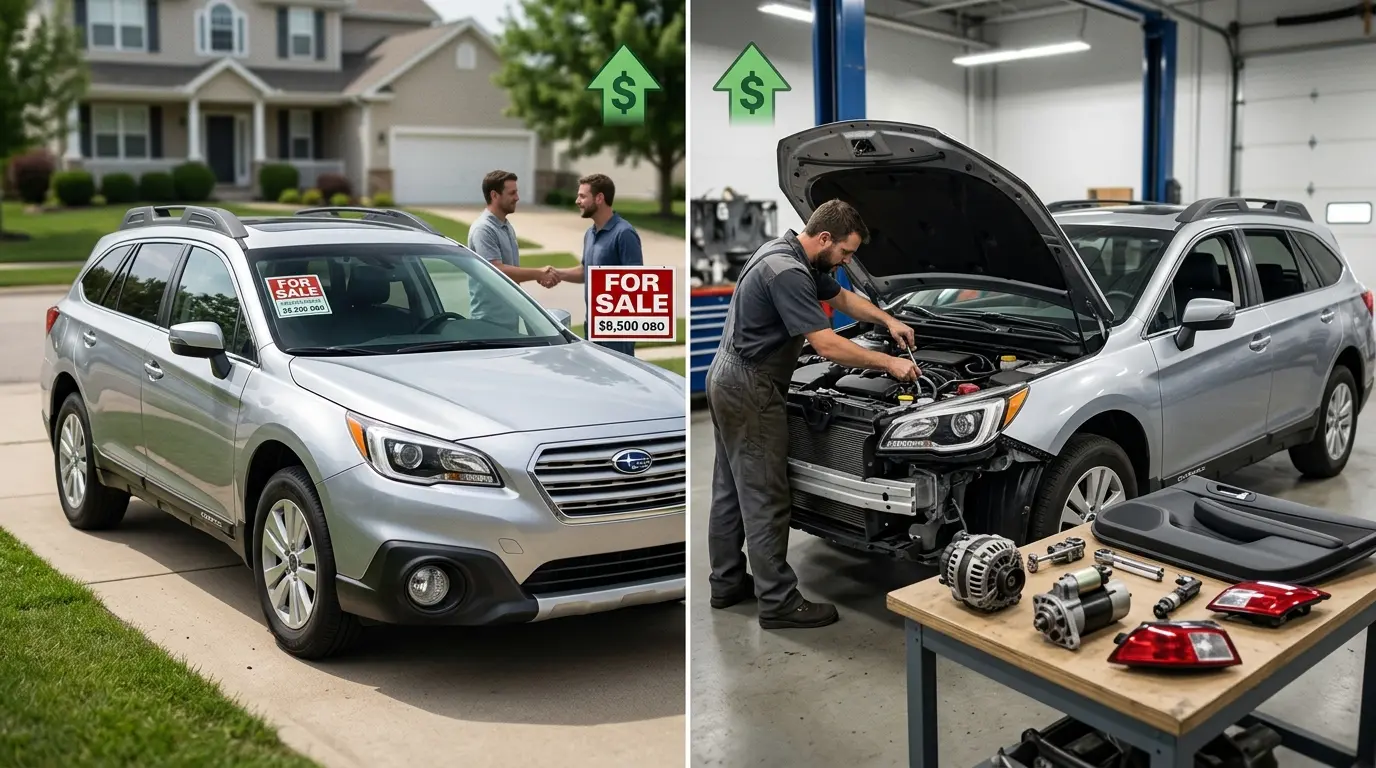
When an old or damaged vehicle reaches the end of its useful life, many owners ask the same question: should they part out car or sell the whole? At first glance, selling individual components may seem like the better way to maximize profit. After all, the engine, transmission, or wheels could fetch more than a single cash bid.
The best payout is not always the highest potential earnings. Breaking a car apart takes time, space, tools, patience, and buyers for each piece. Selling the complete vehicle, however, is generally much quicker and far less complicated.
This guide breaks down both options in a side-by-side comparison, exposes the hidden costs most sellers never consider, and helps you determine which one makes the most financial sense for your car, timeline, and lifestyle.
There Is More Than One Way to Make Money From an Old Car
The common stereotype about every unwanted vehicle is that it goes to the same place: a scrapyard. In reality, you have two practical choices.
One option is to disassemble the car yourself and sell its valuable parts individually. The other is to sell the entire vehicle to a buyer who handles everything after the purchase.
Neither option is automatically better. The right decision depends on several factors, including:
- Vehicle condition
- Demand for replacement parts
- Available free time
- Mechanical experience
- Storage space
- How quickly do you want to sell
| Helpful Insight: The option that generates the highest gross income is not always the one that leaves you with the most money after considering your time, expenses, and effort. |
Option One: Selling Individual Parts
Choosing to sell a car for parts can sometimes produce a higher return than selling the entire vehicle. Instead of accepting one payment, you earn money gradually as different components are sold.
This approach works best when the vehicle contains multiple valuable parts that remain in good condition.
Parts That Commonly Hold Their Value
While every vehicle is different, buyers commonly look for:
- Engine assemblies
- Transmission systems
- Catalytic converters
- Wheels and tires
- Doors and body panels
- Headlights and taillights
- Interior components
- Electronic control modules
Vehicles from popular manufacturers with strong replacement-part demand often perform better in the used-parts market than uncommon or discontinued models.
When Parting Out Makes Financial Sense
Selling parts individually may be worth considering when:
- Damage is limited to one section of the vehicle.
- Multiple expensive components still function properly.
- Replacement parts are in high demand.
- You have enough time to manage individual sales.
- You already possess basic mechanical knowledge and tools.
For some owners, this method can increase overall earnings compared to accepting one lump-sum offer.
The Hidden Costs Most People Forget
Looking only at the selling price of each part tells only half the story. Every successful parts sale involves additional work that many first-time sellers overlook.
Before deciding to part out a car, consider these often-forgotten expenses:
| Hidden Cost | Why It Matters |
| Time required | It can take weeks or even months to remove, photograph, list, and ship parts. |
| Specialized tools | Many components require professional tools for safe removal. |
| Storage space | Removed parts must remain protected until sold. |
| Marketplace fees | Selling platforms may deduct listing or transaction fees. |
| Shipping heavy parts | Large components can be expensive to package and transport. |
| Unsold inventory | Some parts may never find a buyer. |
| Fluid disposal | Oil, coolant, fuel, and other fluids must be handled responsibly. |
| Remaining shell removal | The vehicle shell still has to be removed after usable parts are stripped out. |
By the time these expenses are added together, many owners discover that the profit difference between selling parts separately and selling the whole vehicle is much smaller than expected.
Option Two: Selling the Entire Vehicle
Many owners eventually choose to sell a junk car whole because the process is much simpler from start to finish.
Instead of managing dozens of individual transactions, you receive one offer for the entire vehicle. Once the sale is completed, the buyer generally handles towing, transportation, and recycling.
This option is especially appealing when:
- The vehicle no longer runs.
- Major repairs exceed the vehicle’s value.
- You need to free up space quickly.
- You want to avoid dismantling the vehicle yourself.
- You prefer immediate payment instead of waiting for multiple buyers.
Companies such as iBuy Vehicles simplify this process by providing straightforward offers and helping owners avoid the time-consuming process of selling parts one by one.
Comparing Both Options Side by Side
Choosing becomes much easier when both approaches are viewed together.
| Factor | Selling Individual Parts | Selling the Whole Vehicle |
| Potential earnings | Often higher if many valuable parts sell | Usually lower, but immediate |
| Time investment | High | Low |
| Mechanical knowledge | Usually required | Not required |
| Storage requirements | Significant | None |
| Number of buyers | Multiple | One |
| Payment timeline | Spread over weeks or months | Often completed quickly |
| Overall convenience | Lower | Much higher |
Neither option fits every situation. The better choice depends on how much you value maximizing every possible dollar versus saving time and avoiding additional work.
When Selling the Whole Car Is Usually the Better Choice
Selling a car in parts is not always a good idea. However, once you factor in time, effort, and incidental expenses, selling the whole car is often going to be a better return on your investment anyway.
This option is often the best choice when:
- The vehicle has extensive mechanical damage.
- You need the money quickly.
- You have no place to put the components you take out.
- That vehicle has been sitting for a long time.
- You also do not want to deal with many individuals with demands.
- The owner is tired of selling parts one at a time over weeks instead of completing the transaction in 1 sitting and moving on.
How to Decide Which Option Will Make You More Money
No single answer applies to every vehicle. The smarter approach is to compare both options using a realistic cost breakdown instead of focusing only on the highest possible payout.
A Simple Decision Formula
Ask yourself these questions:
- ✔ How much could the valuable parts realistically sell for?
- ✔ How many hours will it take to remove them?
- ✔ Do you already own the necessary tools?
- ✔ Will you need to pay marketplace or shipping fees?
- ✔ How much is your time worth?
- ✔ What will it cost to remove the remaining vehicle shell?
Once you subtract these hidden costs, the difference between both options often becomes much clearer.
A Quick Comparison
| Question | Part Out the Vehicle | Sell the Whole Vehicle |
| Want the highest possible return? | Sometimes | Usually moderate |
| Need money quickly? | No | Yes |
| Do you have mechanical experience? | Helpful | Not necessary |
| Do you have storage space? | Required | Not required |
| Want the easiest process? | No | Yes |
| Comfortable managing multiple buyers? | Yes | No |
For many owners, convenience becomes just as valuable as the final selling price.
Situations Where Parting Out Is Worth Considering
Although selling the entire vehicle is often easier, there are situations where dismantling the vehicle yourself can produce better results.
You May Earn More If:
- The engine and transmission still work well.
- The vehicle is a popular make or model with strong replacement-part demand.
- Body panels remain in excellent condition.
- Interior components have very little wear.
- You already have buyers interested in specific parts.
- You have the time to wait for multiple sales.
When several of these conditions apply, selling individual parts may produce a higher overall return.
Situations Where Selling the Whole Vehicle Makes More Sense
Many vehicles simply do not contain enough valuable components to justify the extra work involved in dismantling them.
Selling the Whole Vehicle Is Often Better If:
- The vehicle has severe accident damage.
- Major mechanical systems have already failed.
- Rust affects multiple areas.
- You need the vehicle removed quickly.
- You want immediate payment.
- You do not want to deal with listings, shipping, or negotiations.
Companies that buy vehicles in various conditions can simplify this process by handling pickup and much of the paperwork, allowing owners to avoid weeks or months of additional effort.
Mistakes That Reduce Your Overall Profit
Many first-time sellers focus entirely on the selling price while overlooking expenses that reduce their final earnings.
Avoid These Common Mistakes
- Assuming every removed part will sell.
- Forgetting to calculate shipping expenses.
- Underestimating the time required for dismantling.
- Improperly disposing of vehicle fluids.
- Pricing parts without researching market demand.
- Leaving the remaining shell sitting after valuable components have been removed.
Avoiding these mistakes can help you make a more informed financial decision before taking your vehicle apart.
Ready to Get the Best Value From Your Vehicle?
Whether you decide to part out your vehicle or sell it whole, the smartest decision is the one that considers both potential earnings and the time, effort, and expenses involved. Looking beyond the selling price alone will help you determine which option truly delivers the greatest overall value.
If you prefer a fast, straightforward process without dismantling your vehicle, iBuy Vehicles makes selling simple. We provide fair cash offers and also ensure a seamless experience from quote to payment so you can turn the page without delay or unpleasant surprises.
Contact our team today to request your free, no-obligation quote and see how much your vehicle is worth. Whether it is running, damaged, or ready for retirement, we are here to help you sell with confidence and convenience.
Frequently Asked Questions
Is Parting Out a Car Worth It?
It can be — but only in the right circumstances. So if your car has many valuable parts that are still in great shape, enough buyers who want them, and you have the time and tools to remove the items for sale, then parting it out may bring in a higher amount during its sale. If not, selling the entire vehicle is typically the easier route.
Can I Sell a Car for Parts Without Removing Everything?
Yes. Certain owners sell just a few items of very high value and then sell the rest of the car. However, do note that people buying parts individually take time, and afterwards you will still need to get rid of the car shell.
What Parts Are Usually Worth the Most?
The highest resale value is usually attached to the engine, transmission, catalytic converter, wheels, and some electronic modules and body panels. However, the actual value depends on your vehicle’s make, model, condition, and current market demand.
How Long Does It Take to Part Out a Vehicle?
There is no fixed timeline. Disassembly, listing, buyer communication, packing of parts, and shipping can take a few weeks to months, depending on how many times buyers compromise.
Can I Sell a Non-Running Vehicle Whole?
Yes. These are vehicles that often can’t be driven, have accident damage, or would cost far too much, such as tired engines and impossible-to-obtain spare parts. If you don’t want to disassemble the vehicle yourself, selling the whole vehicle is often your quickest solution.
Which Option Is Better for Most Vehicle Owners?
For most people, selling the whole vehicle provides the best balance of convenience, speed, and value. While parting out may produce a higher gross return in some cases, many owners find that the additional labor, storage requirements, and selling time outweigh the extra profit.