Have an old, broken-down, or nonworking automobile parked in the driveway, you have likely heard of such things as junkyard vs scrap yard, salvage yard, junk car buyer, etc. They seem to have overlapping purposes, but each one is used for something specific and can lead you down an entirely different selling path.
Your choice can impact your final payment, the amount of paperwork needed, whether or not towing is included, and how long it takes for you to get rid of your vehicle. Recognizing these distinctions is among the very best methods to make a wiser choice before you sell your car.
In this guide, we will compare each option side by side, explain when each one makes sense, and help you determine the best place to sell a junk car in Texas based on your vehicle’s condition and your priorities.
Understanding Your Three Main Options
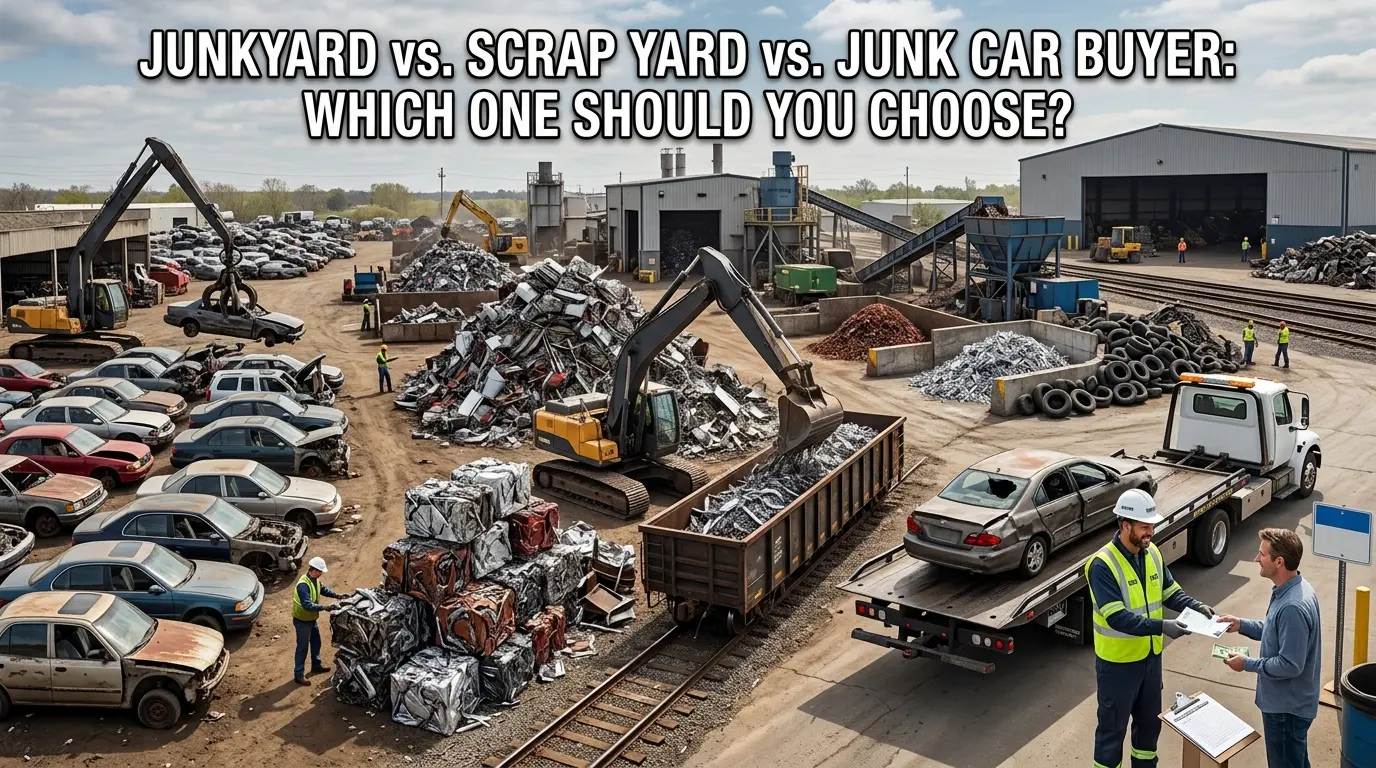
Before comparing payouts or convenience, it helps to understand what each option actually does. Although all three deal with unwanted vehicles, they operate differently and evaluate cars using different criteria.
What Is a Junkyard?
Junkyards buy used or wrecked vehicles that still have working auto parts. Rather than scrapping the whole vehicle from day one, most junkyards strip valuable parts and sell them to buyers interested in cheap replacements.
While junkyards will commonly take the following vehicles:
- Older vehicles with reusable parts
- Collision-damaged cars
- Vehicles with mechanical problems
- Cars that are no longer roadworthy
Since many junkyards earn revenue from parts resale, the condition of individual components can sometimes influence how much they are willing to pay.
What Is a Scrap Yard?
A scrap yard is where metal resourcing actually takes place, as opposed to a junkyard, which is basically just a big warehouse selling individual parts from vehicles. When the car does arrive, it’s usually stripped out for metal recycling, so weight becomes the most weighted (pun intended) aspect in terms of value.
A scrap yard may be a suitable option if:
- The vehicle has little to no reusable value.
- Most major components are already missing.
- The vehicle is mainly being sold for its metal.
This is one of the biggest differences in the scrap yard vs junkyard comparison. One looks at reusable parts, while the other is primarily interested in recyclable materials.
What Is a Junk Car Buyer?
Junk car buyers buy unwanted vehicles directly from the owner while dealing with much of the process from start to finish. Rather than count on you to hold that vehicle back, the majority of buyers organize pickup, make clear the forms, and offer a quote before visiting your home.
Depending on the company, they may purchase:
- Running vehicles
- Non-running vehicles
- Accident-damaged cars
- Flood-damaged vehicles
- Older vehicles nearing the end of their lifespan
For many owners, this option offers a more hassle-free experience because it combines valuation, pickup, and payment into a single process.
Helpful Note
Although these businesses all purchase unwanted vehicles, they do not calculate value the same way. That is why two buyers looking at the same junk vehicle may offer completely different prices.
Quick Comparison at a Glance
Having understood how each one works, comparing them side by side is quite simple. Even though the highest offer tends to steal headlines, convenience, paperwork, and how they pick it up may prove to be no less important.
| Feature | Junkyard | Scrap Yard | Junk Car Buyer |
| Primary Focus | Reusable auto parts | Scrap metal | Purchasing complete vehicles |
| Potential Payout | Depends on parts demand | Based largely on scrap weight | Based on overall vehicle value and market demand |
| Vehicle Pickup | Sometimes available | May require delivery | Commonly offered |
| Towing Charges | Varies by business | May apply | Often included |
| Paperwork Help | Limited | Usually minimal | Frequently provided |
| Processing Time | Moderate | Usually quick after delivery | Often completed within a short timeframe |
| Best For | Vehicles with valuable parts | Vehicles with little resale value | Owners looking for convenience and complete service |
No single option is automatically the right choice for everyone. A vehicle with valuable reusable components may perform well at a junkyard, while one that has reached the end of its useful life may be better suited for a scrapyard or a junk car buyer. Understanding these differences will also help explain why offers can vary, which is exactly what we will cover next.
Which Option Pays More for a Junk Vehicle?
One of the biggest questions people ask before they sell a junk car is who actually offers the best payout. The answer is not as straightforward as choosing one type of buyer over another. Several factors influence what your vehicle is worth, and understanding them can help you make a more informed decision.
What Affects the Final Offer?
Every buyer has their own way of evaluating a vehicle. While one company may focus on reusable parts, another may look primarily at metal value or overall resale potential.
Some of the biggest factors that influence your offer include:
- Overall vehicle condition
- Current scrap weight
- Demand for reusable car parts
- Vehicle make and model
- Local market demand
- Transportation costs
These details help explain why two businesses can inspect the same vehicle and still provide different offers.
Why Two Buyers May Offer Different Prices
A junkyard may place more value on vehicles with usable components, while a scrap yard is often more interested in the amount of recyclable metal. A junk car buyer, on the other hand, may evaluate the vehicle as a whole and factor convenience into the offer by including pickup and paperwork assistance.
This is why comparing offers is often more valuable than accepting the first quote you receive.
| Quick Tip: Before deciding where to sell a junk car, request quotes from multiple buyers. A few extra minutes spent comparing offers can help you identify better pricing and avoid unexpected deductions later in the process. |
Convenience Matters Just as Much as Price
A higher offer sounds great, but price isn’t the only thing that matters. The overall experience can be very different depending on who you choose, especially for scheduling, paperwork, and vehicle pickup.
Vehicle Pickup and Towing
If your vehicle no longer runs, transportation quickly becomes an important consideration. Some businesses expect you to arrange delivery yourself, while others include pickup as part of the transaction.
When comparing buyers, consider whether they offer:
- Vehicle pickup
- Flexible scheduling
- Towing at no additional cost
- Assistance if the vehicle is difficult to access
These services can make a noticeable difference, particularly if your vehicle has been sitting for months or cannot be driven safely.
Paperwork and Processing Time
Selling an unwanted vehicle also involves documentation. Some buyers provide guidance throughout the process, while others leave most of the paperwork to the seller.
Before accepting an offer, it is worth asking about:
- Required ownership documents
- Paperwork assistance
- Estimated processing time
- When will payment be provided
Knowing what to expect ahead of time can help prevent delays and make the experience much smoother.
Which Option Fits Your Situation Best?
Choosing between a junkyard, scrap yard, and junk car buyer becomes much easier once you think about your vehicle’s condition rather than focusing only on the highest advertised offer.
The table below can help you identify which option may be the better fit.
| If Your Vehicle… | Recommended Option | Why It May Be the Better Choice |
| Still has valuable parts | Junkyard | Individual components may increase its value. |
| Is mostly damaged beyond repair | Scrap Yard | The vehicle’s metal value becomes the primary focus. |
| Does not run | Junk Car Buyer | Pickup is often available, making the process easier. |
| Needs to be removed quickly | Junk Car Buyer | Many buyers schedule pickup within a short timeframe. |
| Has little resale value | Scrap Yard | Selling it for recyclable materials may be the most practical choice. |
| You want the simplest process | Junk Car Buyer | Many handle pickup, paperwork, and payment together. |
Before you definitively answer the junkyard vs scrap yard question, remember that no two vehicles are alike. Examples of this would be a junkyard that is more inclined to offer you a higher price for a car with parts that are in demand, but at all other times, the value of really badly damaged cars might be worth nothing more than scrap. If efficiency is at the top of your to-do list, most owners prefer the simplicity of seeing a junk car buyer.
Before You Choose, Ask These Important Questions
Now you must have realised that each option has its own benefits. Take a moment to compare more than just the price. If ever, then right questions upfront will save you from unavoidable hold-ups or cuts.
A Simple Checklist Before You Sell Your Car
✔ Is vehicle pickup included?
✔ Are there any towing fees?
✔ Is the quote guaranteed, or could it change later?
✔ Who handles the paperwork?
✔ How quickly can the vehicle be picked up?
✔ When will I receive the final payment?
✔ Are there any hidden deductions?
These questions help you round out the experience beyond just the dollar amount offered.
Common Myths About Junkyards, Scrap Yards, and Junk Car Buyers
There are a lot of myths around selling an unwanted car. And believing them can actually complicate the process of picking the choice that is aligned with your needs.
| Myth | Reality |
| Every buyer pays the same amount. | Every business uses its own pricing method, so offers can vary. |
| Scrap yards always pay the most. | Payment depends on the vehicle’s condition, demand, and the buyer’s business model. |
| A junkyard accepts every vehicle. | Some junkyards only purchase vehicles that contain valuable reusable parts. |
| You always have to arrange towing yourself. | Many junk car buyers include vehicle pickup as part of the transaction. |
| The first quote is usually the best one. | Comparing multiple offers often helps you find better pricing and service. |
Understanding these differences can help you make a more informed decision instead of relying on common assumptions.
Final Thoughts
Choosing between a junkyard vs scrap yard or a junk car buyer ultimately depends on your vehicle and what matters most to you. As long as a junkyard can take out parts still useful on your car, it’s probably worth it. If it lacks value beyond its metal, then a scrap yard might be more appropriate.
That said, if you want a hassle-free process that includes pickup, paperwork help, and an easy transaction, many car owners opt for a junk car buyer. No matter which option you choose, comparing offers and knowing exactly what is included can allow you to sell your junk with more confidence as well as maximize the value of what remains of your vehicle.
Frequently Asked Questions
Is There a Difference Between a Scrap Yard vs Junkyard?
Yes. A scrap yard mainly purchases vehicles for their metal value, while a junkyard often looks at reusable parts before the remaining materials are recycled.
Who Pays More for Junk Cars?
There is no single answer because every vehicle is different. The final offer depends on factors such as condition, demand, and how each buyer evaluates the vehicle. Comparing quotes is usually the best way to determine who pays more for junk cars.
Can I Sell a Non-Running Vehicle?
Yes. Many who buy junk cars search are made by owners with vehicles that no longer run. Numerous junk car buyers and some junkyards purchase non-running vehicles, although their requirements may differ.
Do Junk Car Buyers Charge for Towing?
Some do, while many include pickup as part of their service. It is always worth asking whether towing is included before accepting an offer.
How Long Does the Selling Process Usually Take?
The timeline varies depending on the buyer, paperwork, and pickup availability. Some businesses complete the process within a day or two, while others may take longer.
Should I Compare Multiple Offers Before Selling?
Absolutely. Comparing quotes helps you understand the market, evaluate services, and choose the one that pays more for junk cars based on both value and convenience.