Selling a vehicle in Texas can be confusing when you have a title, registration receipt, license plates, and other vehicle paperwork. The most important point is that registration and a title serve different purposes.
If you are preparing to sell a car, understanding the car title vs registration Texas rules can help you avoid delays, ownership disputes, and problems after the sale.
What Is the Difference Between a Texas Car Title and Registration?
A Texas car title is the primary document used to establish the recorded owner of a vehicle. Registration, on the other hand, shows that the vehicle has been registered with the state and is authorized for use on Texas roads.
The easiest way to remember the Texas car title vs registration difference is:
| Document | Main Purpose |
| Texas title | Records vehicle ownership |
| Vehicle registration | Shows the vehicle is registered |
| License plates | Identifies the registered vehicle |
| Bill of sale | Records transaction details |
| Form 130-U | Used for title and/or registration applications |
TxDMV ownership records are tied to the title. When a vehicle is sold, the buyer must complete the title transfer so the ownership record changes. A registration record by itself does not transfer ownership.
Does Registration Prove Ownership in Texas?
No. Registration does not by itself prove ownership in Texas. This is one of the most important points for sellers. A registration receipt can show that a vehicle was registered to someone, but the title record is what matters for the recorded owner and ownership transfer.
TxDMV specifically states that a Vehicle Transfer Notification does not transfer ownership. The new owner must file the title application with the appropriate county tax assessor-collector’s office to be recorded as the owner.
So, handing over the registration, keys, and vehicle does not complete a proper ownership transfer. The title and required paperwork are essential.
What Do You Need to Sell a Vehicle in Texas?
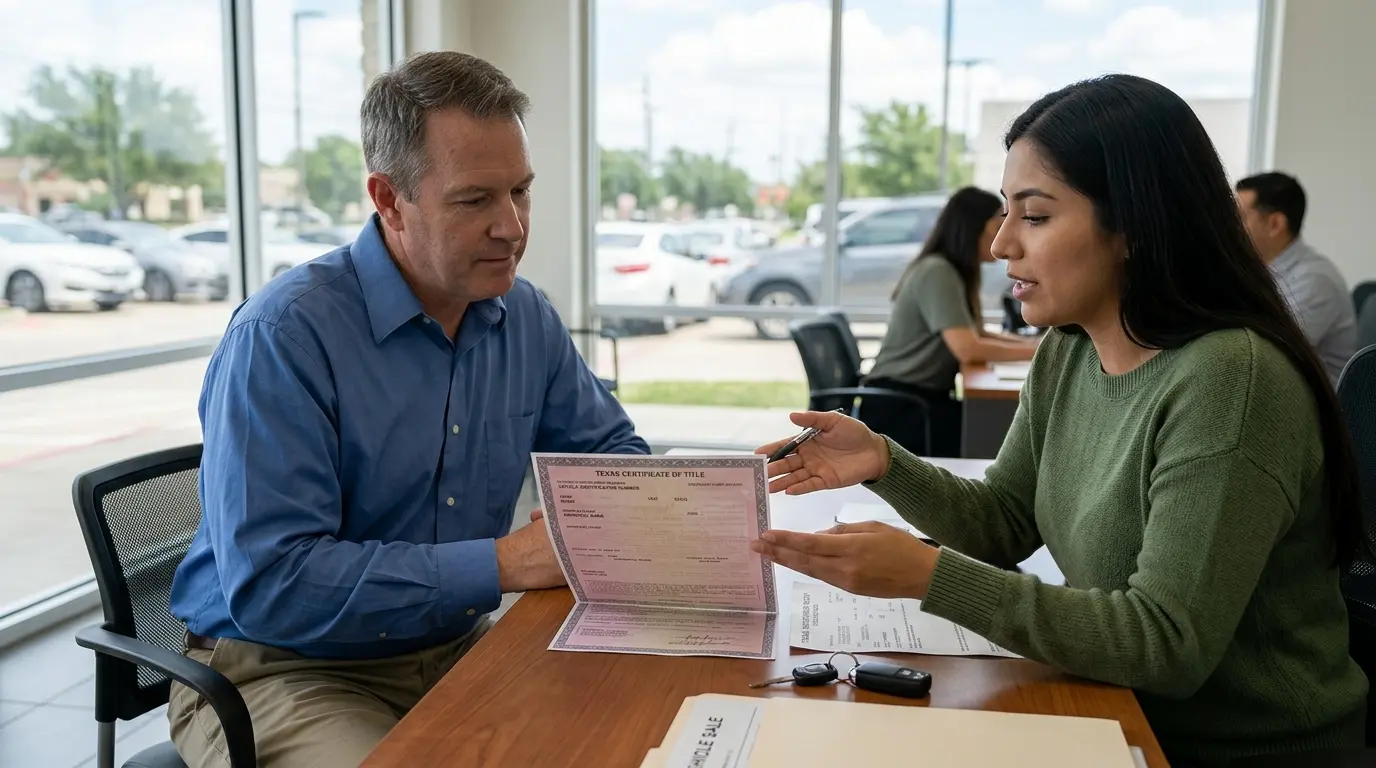
For a normal private-party sale, the seller should prepare the vehicle title and required transfer documents.
TxDMV says the seller should provide the buyer with:
- A properly signed title
- The date of sale
- The odometer reading when required
- A signed Form 130-U showing the sales price
- Accurate vehicle information, including the VIN
The seller should also keep detailed records of the transaction, including the buyer’s contact information, sale date, and VIN. If a lien is recorded on the title, additional documentation may be necessary. For example, TxDMV requires a release of lien or other appropriate documentation when removing a recorded lien from a paper title.
Title vs Registration When Selling a Car
The title supports the ownership transfer. Registration is connected to the vehicle’s registration status and legal road use.
This distinction matters because a vehicle can have current registration while the seller still needs to complete the title transfer correctly. Likewise, expired registration does not automatically mean that the seller has no ownership rights.
For a buyer, the title should match the seller and vehicle information. Always check the VIN on the title against the VIN on the vehicle before completing the transaction.
What the Buyer Does
After purchasing a vehicle, the buyer generally takes the title and Form 130-U to the local county tax assessor-collector’s office. Texas requires the buyer to title the vehicle in their name within 30 days of the sale.
What the Seller Does
The seller should keep transaction records and submit a Vehicle Transfer Notification within 30 days. This creates a record that the vehicle was sold and can help protect the seller from certain liability after the transaction.
What Happens to Texas License Plates and Registration?
Texas rules require sellers in a private sale to remove their license plates and registration sticker from the vehicle. Eligible plates can be transferred to another vehicle, retained for future transfer, or disposed of according to TxDMV requirements. This is another reason not to confuse registration with ownership. Plates and registration relate to the vehicle’s registration status, while the title handles the ownership record.
How Much Are Texas Title and Registration Fees?
Fees vary by county and vehicle circumstances. For 2026, TxDMV lists the Texas title application fee at $28 or $33, depending on the county. The base registration fee for passenger vehicles and light trucks is $50.75, with additional local and applicable fees possible.
For a private-party purchase, the buyer is generally responsible for motor vehicle sales tax. The current Texas state rate is 6.25%, and private-party used vehicles may be subject to Standard Presumptive Value rules when determining taxable value.
For example, if a qualifying transaction has a taxable amount of $20,000, the 6.25% state motor vehicle tax would be $1,250. Actual tax treatment can depend on the transaction and applicable SPV rules.
Can You Sell a Car With Registration but No Title?
A registration document is not a substitute for a Texas title in a standard vehicle sale.
If the title is lost, the recorded owner can apply for a certified copy through TxDMV. The current in-person fee for a certified copy is $5.45, subject to the applicable requirements.
If ownership documentation is complicated because of a missing title, lien, inheritance, or another issue, additional procedures may apply. In those situations, the county tax office or TxDMV can determine what evidence is acceptable.
Quick Seller Checklist
Before selling your vehicle, check these items:
- Locate the original Texas title.
- Confirm the title information matches the vehicle and VIN.
- Check whether a lien is recorded.
- Prepare the signed title and Form 130-U.
- Record the buyer’s information and sale details.
- Remove the license plates and registration sticker.
- Submit the Vehicle Transfer Notification within 30 days.
For sellers who want an alternative to finding an individual buyer, iBuy Vehicles can provide another option for handling the vehicle-selling process.
Frequently Asked Questions
Does Texas registration show who owns a car?
Registration shows that a vehicle is registered, but it is not the document that transfers ownership. The Texas title record identifies the recorded owner. A buyer must complete the title transfer through the appropriate county tax office process.
Can I sell a car in Texas with expired registration?
Expired registration does not automatically eliminate ownership, but the sale still requires proper title documentation and transfer paperwork. The buyer will need to complete the required title and registration process after purchasing the vehicle.
Do I give the buyer my Texas registration?
For a private sale, the seller should remove the license plates and registration sticker. The key ownership document is the properly assigned title, along with the required title-transfer paperwork.
How long does a buyer have to transfer a title in Texas?
Texas requires the buyer to title the vehicle in their name within 30 days of the sale. The seller should also submit a Vehicle Transfer Notification within 30 days to help protect against certain post-sale liability.
Final Thoughts: Know the Texas Title and Registration Difference
The key lesson in the car title vs registration Texas process is simple: registration is not a substitute for a title. The title supports the ownership transfer, while registration relates to the vehicle’s registration and road-use status.
Before selling, check your title, confirm the VIN, handle any lien correctly, complete the required paperwork, remove your plates, and submit the transfer notification. iBuy Vehicles can be an option for Texas sellers who want to avoid some of the steps involved in a traditional private-party sale.