Selling a damaged car can be confusing. You may wonder what it is worth. The salvage car value depends on several factors. Damage severity, parts demand, and scrap metal prices all play a role. This guide explains the process clearly. You will understand how buyers calculate offers. You will also learn how to get a fair price for your vehicle.
What Is a Salvage Vehicle?
A salvage vehicle is a car that has been declared a total loss by an insurance company. This happens when repair costs exceed the car’s value. Flood damage, accidents, or theft recovery can cause this status. The car receives a salvage title. This marks it as severely damaged.
Not all salvage cars are worthless. Many have valuable parts. Engines, transmissions, and catalytic converters can be resold. The remaining metal is sold for scrap. This is why salvage car value exists.
What Is the Salvage Car Value?
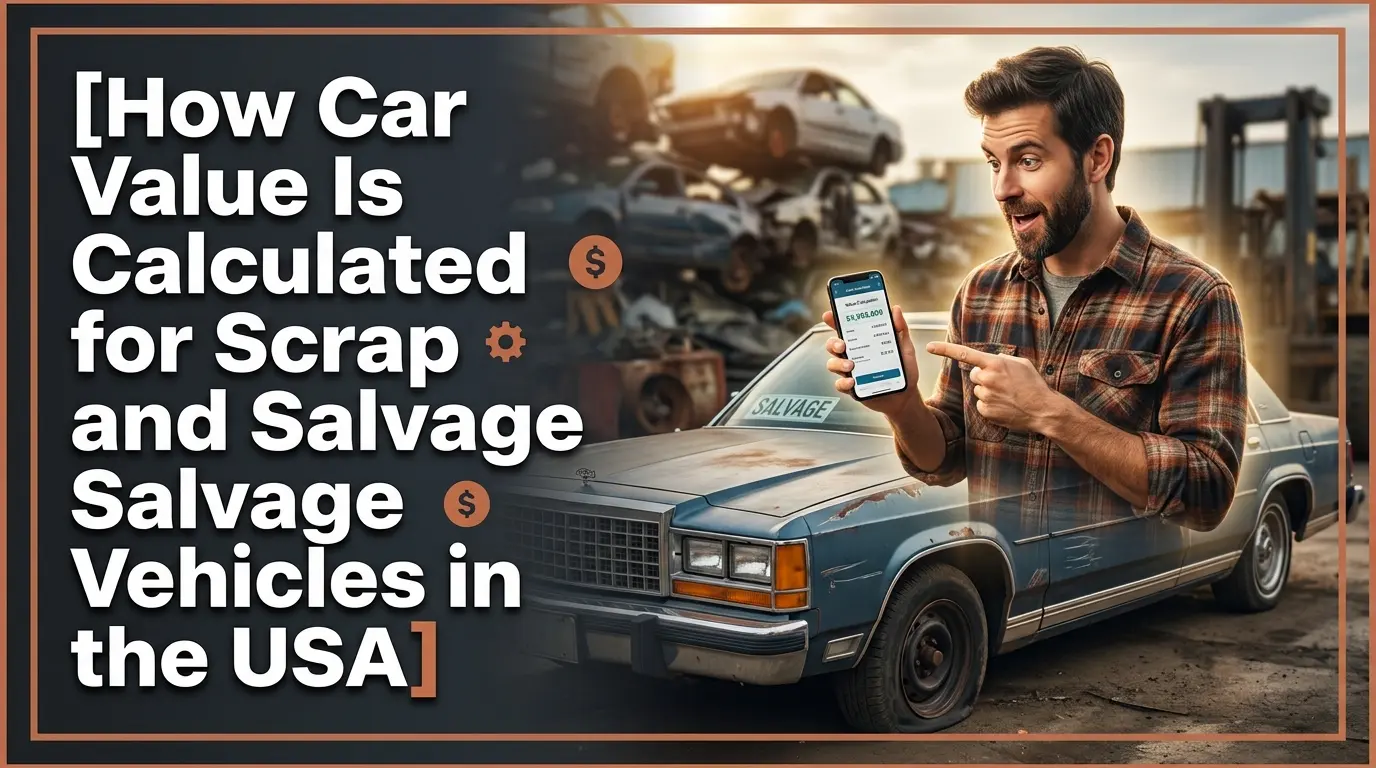
Salvage car value is the amount a buyer will pay for a damaged vehicle. It is different from a clean-title car’s value. The price reflects the car’s parts and scrap metal. It also considers the cost to repair or resell the car. Typically, salvage cars sell for 20-40% of their pre-damage value. Some cars with high parts demand sell for more.
I Buy Vehicles in Houston offers fair cash offers for salvage cars. They base their offers on the car’s actual worth. They do not use confusing formulas. You get a clear, honest price.
How Is Salvage Car Value Calculated?
The calculation process uses multiple inputs. Buyers look at the car as a source of parts and metal.
Vehicle Condition Grading System
The first step is a condition check. Buyers grade the car based on damage severity. The grades are:
- Grade A: Clean, minor damage. Often repairable.
- Grade B: Significant damage. Needs extensive repair.
- Grade C: Heavy damage. Parts only.
- Grade D: Very heavy damage. Scrap metal only.
This grade determines the car’s likely use. A Grade A car might be resold. A Grade D car is crushed and recycled.
VIN-Based Valuation Methods
The Vehicle Identification Number (VIN) tells a lot about the car. It shows the make, model, year, and engine size. Buyers use the VIN to check the car’s original value. They also check for recalls, accidents, and theft history. This data helps determine the potential parts value.
A popular car like a Ford F-150 has high parts demand. Its VIN will yield a higher salvage value. A less common car may have lower demand.
Repair Cost vs. Resale Value
The repair cost is a major factor. Buyers calculate what it costs to fix the car. They compare that to the car’s resale value after repair. If repairs are too high, the car is worth less. If repairs are low, the salvage value increases.
For example, a car with a dented door might be cheap to fix. Its salvage value is higher. A car with a bent frame is expensive to repair. Its value drops.
Metal Weight Pricing System
The metal weight of the car is a baseline value. Even if the car has no usable parts, the metal is worth something. Steel is the most common material. Aluminum and copper are also valuable.
Scrap metal prices change daily. They are based on global supply and demand. When metal prices are high, salvage values rise. When they drop, values fall.
Catalytic Converter Valuation Impact
The catalytic converter is often the most valuable part. It contains precious metals like platinum and palladium. These metals are expensive. A converter can be worth $100 to $500 or more. This adds a lot to the salvage value.
Buyers check the converter’s condition and type. Some converters are more valuable than others. This is why some cars have higher salvage values.
Accident Damage Severity Impact
The type of damage matters. Frame damage reduces value. A car with a bent frame cannot be easily repaired. Its parts are hard to use. It is often sent for scrap.
Body damage is less severe. A car with smashed panels still has good mechanical parts. Its engine and transmission can be sold. This keeps the value higher.
How Do Insurance Companies Determine Total Loss Value?
Insurance companies use a formula. They calculate the Actual Cash Value (ACV) before the accident. They then estimate repair costs. If repairs exceed a certain percentage of the ACV, the car is a total loss. The percentage varies by state. It is usually 75-85%.
The ACV is the car’s fair market value. It is based on age, condition, and mileage. The insurer uses guidebooks like Kelley Blue Book. They also check local market prices. The deductible is subtracted from the payout.
The Total Loss Formula in Texas
Texas uses a different calculation. The insurer adds repair costs to salvage value. If that total exceeds the ACV, the car is totaled. This considers the car’s remaining worth. The formula is:
Repair Cost + Salvage Value > ACV
If the equation is true, the car is a total loss. The owner receives the ACV minus the deductible.
What Happens to a Total Loss Car?
The insurance company takes ownership. They sell the car at a salvage auction. Buyers at these auctions are licensed dealers. They buy cars for parts or repair. This is where many salvage cars enter the market.
What Is a Vehicle Scrap Value Calculator?
A scrap value calculator is an online tool. It estimates a car’s worth based on its weight and metal prices. You enter your car’s make, model, and year. The calculator uses average metal prices. It gives you a rough estimate.
These calculators are simple. They do not account for parts like converters or engines. They are a starting point. A real offer from a buyer like I Buy Vehicles is more accurate.
How Does a Salvage Yard Pricing System Work?
Salvage yards use a system. They price each car differently. The system follows these steps:
- Inspection: The yard inspects the car. They note the damage and parts.
- Parts Assessment: They list usable parts. They check the condition of the engine, transmission, and interior.
- Catalytic Converter Check: They check the converter’s type and value.
- Weight Calculation: They weigh the car. This gives the scrap metal baseline.
- Final Offer: They combine parts value and scrap value. They subtract their costs for towing and processing.
The offer is the salvage value. It is what they pay you for the car.
How Are Scrap Metal Market Rates Determined?
Scrap metal rates are set by global markets. Steel, aluminum, and copper are commodities. Their prices change based on:
- Supply and Demand: High demand for steel raises prices.
- Economic Conditions: A strong economy uses more metal.
- Trade Policies: Tariffs can affect prices.
- Energy Costs: It costs energy to melt and recycle metal.
When rates are high, salvage values rise. You get more money. When rates fall, you get less.
How Does I Buy Vehicles Calculate Offers?
I Buy Vehicles is a trusted Houston buyer. They have 10+ years of experience. Their pricing is fair and transparent.
Their Process
They inspect your car on site. They check the damage, parts, and weight. They use a comprehensive valuation system. This includes market prices for parts and metal. They also consider the car’s make and model.
Their Offer
They give you a firm cash offer. The offer is based on the car’s salvage value. There are no hidden fees. You get paid on the spot.
Their Advantage
They buy all cars, running or not. They handle the paperwork. They offer free towing. They make the process easy. Their customer-first approach is why Houston sellers trust them.
Sell Your Salvage Car to I Buy Vehicles
Do you have a salvage car? Selling it does not need to be hard. I Buy Vehicles makes it simple. They give fair cash offers based on the true salvage car value. They handle the title and paperwork. You get paid instantly. They offer free towing anywhere in Houston.
Ready to sell? Contact I Buy Vehicles today. Call them or visit their website at i buy vehicles. Turn your damaged car into cash quickly.
Frequently Asked Questions
How is salvage car value calculated?
It is based on the car’s parts value, catalytic converter, scrap metal weight, and repair costs. Buyers inspect the car and use current market prices. A VIN check also affects the value.
What affects salvage car value the most?
The catalytic converter and the demand for parts have the biggest impact. Frame damage and scrap metal prices also matter. High demand for parts raises the value.
Can I get a good price for my salvage car?
Yes, with a buyer like I Buy Vehicles. They offer fair cash offers based on accurate valuations. They are transparent and do not lowball sellers.
What is the difference between salvage value and scrap value?
Salvage value is the total worth of the car as a source of parts and metal. Scrap value is just the metal’s worth. Salvage value is usually higher.